
How it works
From quote to delivery: everything you need to know before sending a suitcase.
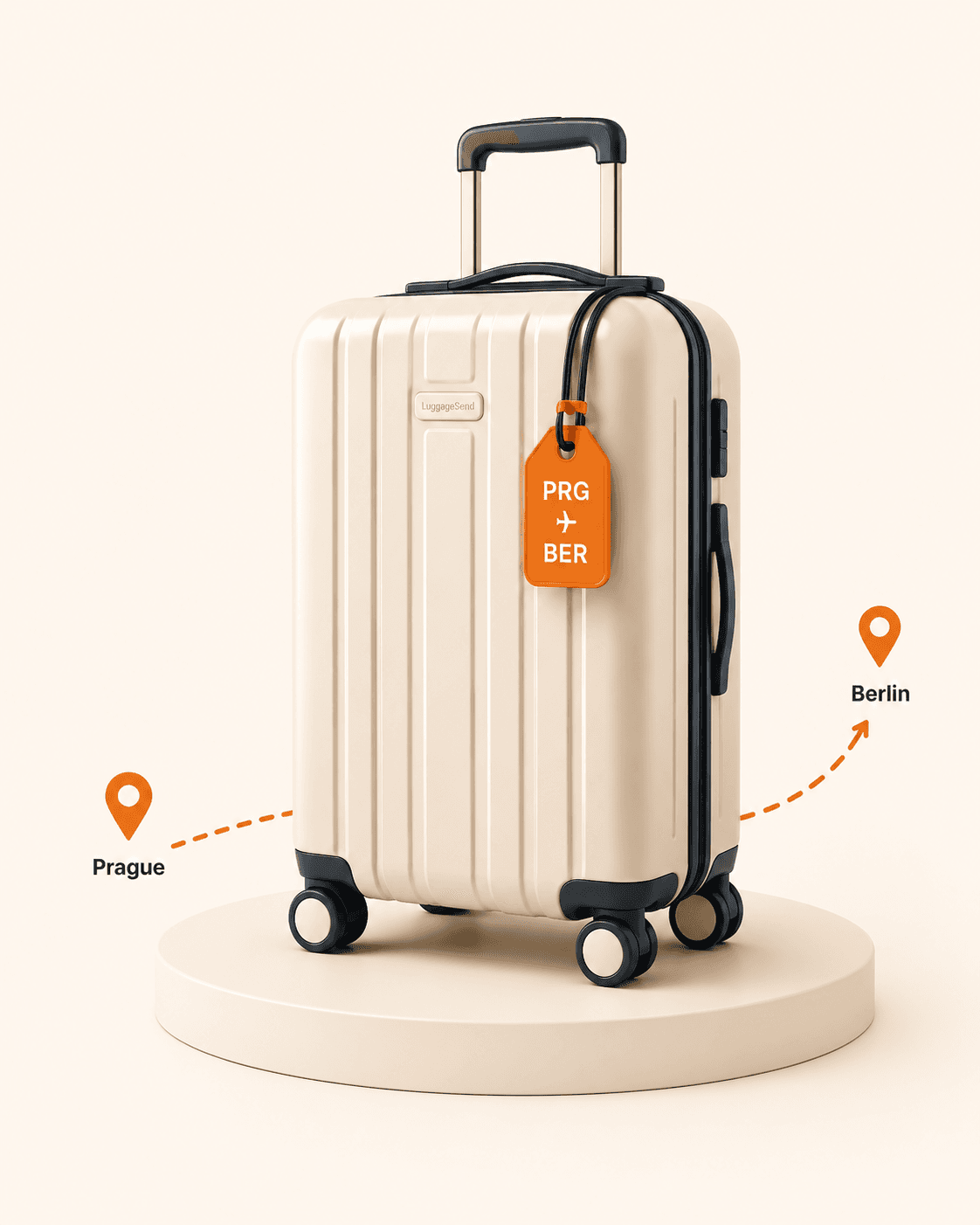
1. Measure and weigh your luggage
Measure the longest side × width × height in centimetres and the weight in kilograms, including wheels, handles and bulges. Be accurate — carriers re-measure shipments and surcharges for extra weight or size are billed to you. The calculator presets (Suitcase S/M/L/XL, Oversized) are fully editable.
2. Pack for the journey
Carriers accept luggage packed in a sturdy cardboard box — a suitcase or bag on its own is not enough. Remove or tape down straps, name tags and detachable parts. Wrap fragile items thoroughly — luggage travels through standard parcel networks. Prohibited items must stay out (see the Luggage page). Don't have a suitable box on hand? We'll arrange one for you — read on below.
3. Book and get ready for collection
After you complete the order you'll receive a confirmation e-mail with instructions, including the shipping label. Print the label and attach it to your luggage. The courier arrives on the collection day, usually between 8 am and 6 pm; carriers unfortunately can't guarantee an exact time window.
4. Follow the journey
We'll keep you informed about collection, transport and delivery by e-mail. Address deliveries arrive within the time frame shown in the offer; for storage we'll let you know as soon as your luggage is ready for pick-up.
Don't have a suitable box? We'll arrange one
Most people don't have a shipping-ready box at home. In the calculator, you simply tick whether you already have a box for each item. If not, we'll mail you one together with packing tape in advance — abroad, through a vetted local partner. The cost is included in your total price, nothing is billed separately. Because the box needs time to arrive, the earliest possible collection date moves out by a few days — you'll see the exact date right in the calculator. You'll then need to pack your luggage into the supplied box, otherwise the carrier may not accept it.
Outside the EU: customs
For routes outside the EU (e.g. the UK, Switzerland, the USA) you'll declare the contents and value of each piece — typically "personal effects — used clothing and shoes". The calculator clearly marks routes subject to customs. Keep the list handy in case customs asks for it.